


千王之王重出江湖
Beijing named UNESCO-UIA World Capital of Architecture 2029 for blending ancient heritage with innovation_我的网站

A |
原标题:智能眼镜厂商奇点临近完成亿元天使轮融资9月13日,智能眼镜厂商奇点临近宣布完成亿元人民币天使轮融资。 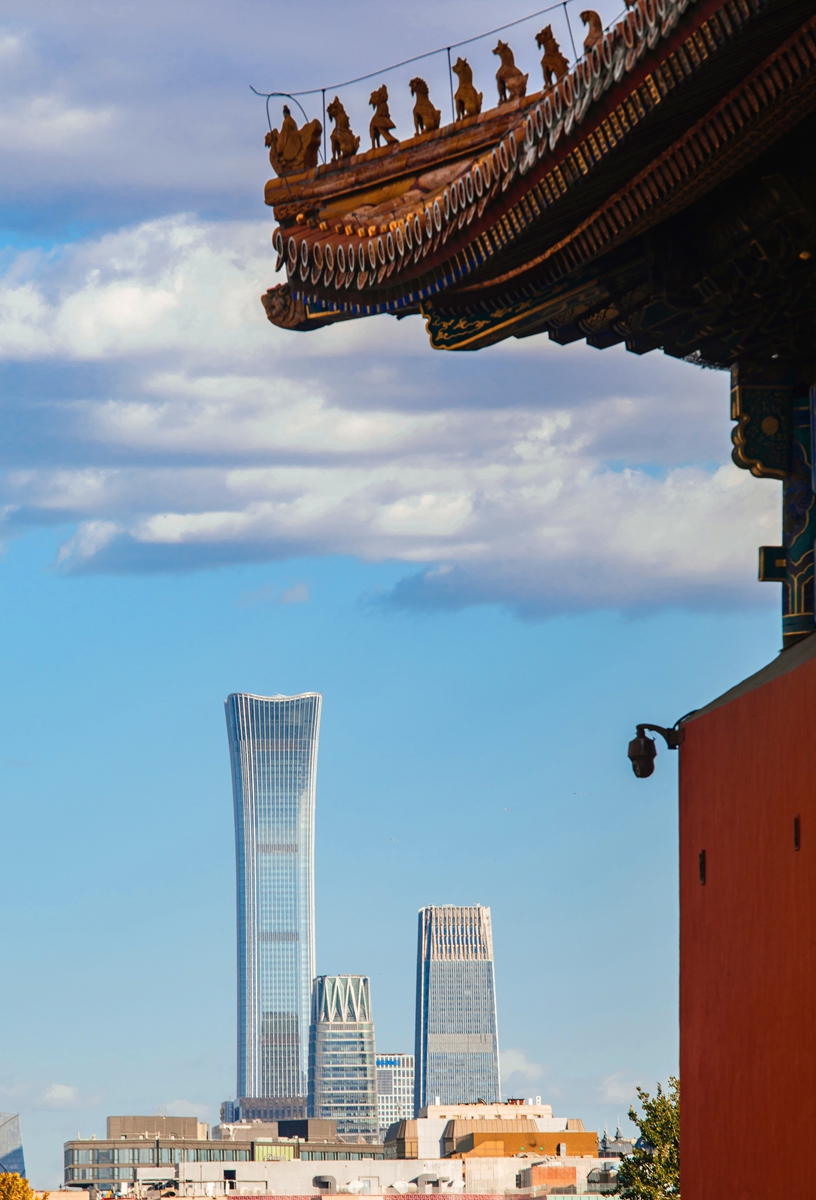
"Beijing was selected for its exceptional ability to bring together one of the world's richest architectural heritages with a forward-looking vision of sustainable urban development. Its historic urban fabric, successful regeneration projects and vibrant architectural culture demonstrate how heritage, innovation and community life can reinforce one another in shaping resilient and livable cities," says UNESCO in a press release.
Established jointly by UNESCO and UIA, the World Capital of Architecture program highlights the transformative role of architecture, urban planning, culture and heritage in advancing sustainable urban development. Every three years, UNESCO designates the host city of the UIA World Congress as the UNESCO-UIA World Capital of Architecture.
Why does the Chinese capital win the title and what does it mean for the ancient city and the international event?
Chinese architect Ma Yansong told the Global Times that Beijing is a beautiful city because it seamlessly blends tradition with modernity. "Historic and contemporary architecture coexist in a very harmonious way, which is one of the reasons UNESCO selected Beijing," he said.
Beijing is home to eight UNESCO World Heritage Sites, including the Great Wall, the Palace Museum, Temple of Heaven and Beijing Central Axis, highlighting its ancient urban planning and cultural heritage preservation.
"For me, the most beautiful landmark in the city is the Temple of Heaven. Its charm comes from the entire setting. As you walk along the elevated pathways surrounded by rows of trees, you naturally develop a sense of ceremony. Then, at the end of the route, the Hall of Prayer for Good Harvests comes into view. The proportions and composition are so perfectly balanced that they remind me of a symphony," Ma said.
In an era of globalization, cities around the world are becoming increasingly connected, making it even more important to preserve what makes each place unique. China, too, needs a recognizable image of its own, one that reflects its rich cultural heritage while presenting an identity to the world, Ma said.
Rio de Janeiro in Brazil became the first city to be designated the UNESCO-UIA World Capital of Architecture in 2020, followed by Copenhagen in 2023 and Barcelona in 2026.
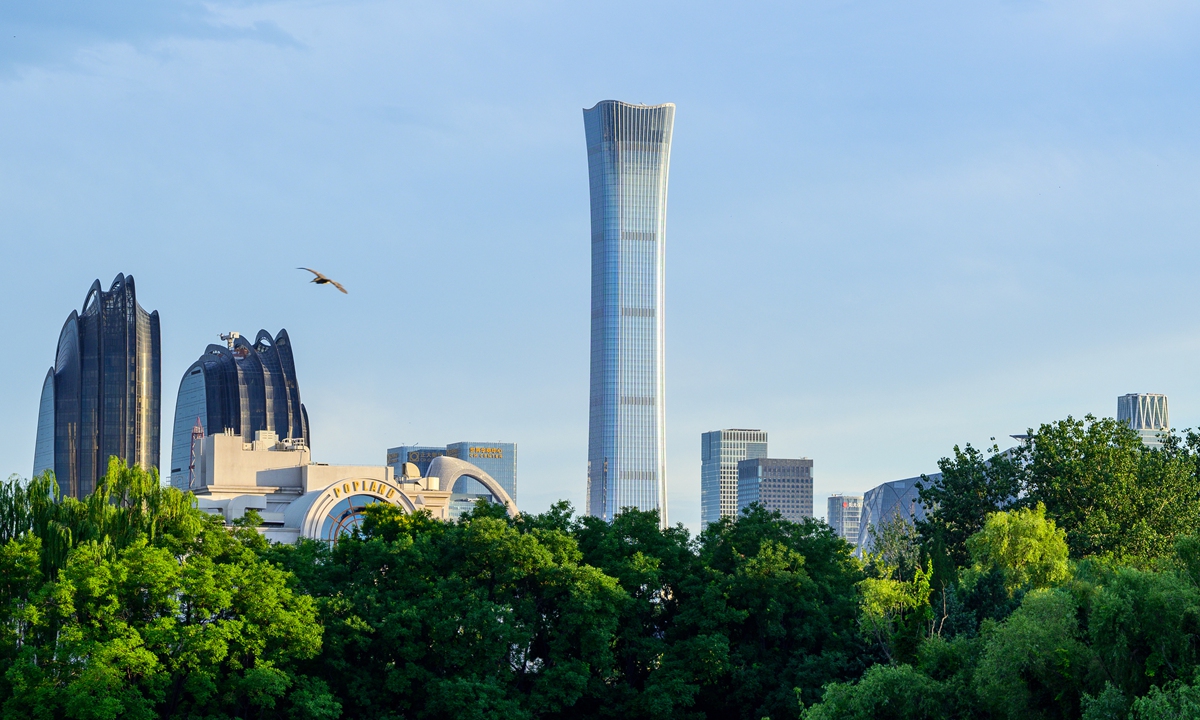
Following the designation, Beijing will host the 2029 UIA World Congress of Architects and General Assembly under the theme "Back to Balance." The Congress aspires to address the global anticipation of restoring balance in the world in three areas titled Balance between Human and Human, Balance between Human and Nature and Balance between Human and Technology, according to UIA.
Lü Ning, an associate professor at the School of Architecture and a senior engineer at the National Heritage Center of Tsinghua University, told the Global Times on Thursday that Beijing's architectural and cultural heritage naturally embodies the core concepts of harmony and equilibrium found in Chinese philosophy's "impartiality and harmony" and "unity of man and nature."
The city's Central Axis, renowned for its spatial symmetry that balances order and landscape design, exemplifies this philosophy. Beijing's holistic urban development approaches also highlight the city's commitment to balance both in heritage preservation and modern exploration, said Lü.
Taking the revitalization of Beijing's Dongxicha Hutong as an example, Zhang Man, an associate professor at Beijing University of Civil Engineering and Architecture, told the Global Times that the project has addressed the balance between long-time residents and new businesses in the historic neighborhood.
While preserving the ancient architecture of the hutong, or traditional alleyway and creating more public spaces, cafés, bookstores and cultural buildings were added to the community near the Miaoying Temple (White Pagoda Temple), breathing new vitality into the once cluttered historic block.
Forward-looking vision
Khaled El-Enany, director-general of UNESCO, said, "As we look towards to Beijing 2029, we are confident that the city's extraordinary architectural heritage, dynamic urban transformation, and forward-looking vision will inspire new international dialogue on the power of architecture in improving people's lives and in safeguarding shared heritage for future generations."
UNESCO's recognition is expected to raise standards for protection and management of the capital's World Heritage Sites, introducing advanced technologies, systematic oversight, and improved long-term monitoring, Lü noted.
Inheritance and revitalization will also benefit, as architects from around the globe exchange ideas and encourage innovative reuse, breathing new life into the heritage. Ongoing public engagement, through exhibitions, workshops, and regular cultural programs, will help keep the heritage alive, he said.
。本轮融资由愉悦资本领投,经纬创投、华映资本参投,云岫资本担任独家财务顾问。
。"Beijing was selected for its exceptional ability to bring together one of the world's richest architectural heritages with a forward-looking vision of sustainable urban development. Its historic urban fabric, successful regeneration projects and vibrant architectural culture demonstrate how heritage, innovation and community life can reinforce one another in shaping resilient and livable cities," says UNESCO in a press release.
Established jointly by UNESCO and UIA, the World Capital of Architecture program highlights the transformative role of architecture, urban planning, culture and heritage in advancing sustainable urban development. Every three years, UNESCO designates the host city of the UIA World Congress as the UNESCO-UIA World Capital of Architecture.
Why does the Chinese capital win the title and what does it mean for the ancient city and the international event?
Chinese architect Ma Yansong told the Global Times that Beijing is a beautiful city because it seamlessly blends tradition with modernity. "Historic and contemporary architecture coexist in a very harmonious way, which is one of the reasons UNESCO selected Beijing," he said.
Beijing is home to eight UNESCO World Heritage Sites, including the Great Wall, the Palace Museum, Temple of Heaven and Beijing Central Axis, highlighting its ancient urban planning and cultural heritage preservation.
"For me, the most beautiful landmark in the city is the Temple of Heaven. Its charm comes from the entire setting. As you walk along the elevated pathways surrounded by rows of trees, you naturally develop a sense of ceremony. Then, at the end of the route, the Hall of Prayer for Good Harvests comes into view. The proportions and composition are so perfectly balanced that they remind me of a symphony," Ma said.
In an era of globalization, cities around the world are becoming increasingly connected, making it even more important to preserve what makes each place unique. China, too, needs a recognizable image of its own, one that reflects its rich cultural heritage while presenting an identity to the world, Ma said.
Rio de Janeiro in Brazil became the first city to be designated the UNESCO-UIA World Capital of Architecture in 2020, followed by Copenhagen in 2023 and Barcelona in 2026.
Following the designation, Beijing will host the 2029 UIA World Congress of Architects and General Assembly under the theme "Back to Balance." The Congress aspires to address the global anticipation of restoring balance in the world in three areas titled Balance between Human and Human, Balance between Human and Nature and Balance between Human and Technology, according to UIA.
Lü Ning, an associate professor at the School of Architecture and a senior engineer at the National Heritage Center of Tsinghua University, told the Global Times on Thursday that Beijing's architectural and cultural heritage naturally embodies the core concepts of harmony and equilibrium found in Chinese philosophy's "impartiality and harmony" and "unity of man and nature."
The city's Central Axis, renowned for its spatial symmetry that balances order and landscape design, exemplifies this philosophy. Beijing's holistic urban development approaches also highlight the city's commitment to balance both in heritage preservation and modern exploration, said Lü.
Taking the revitalization of Beijing's Dongxicha Hutong as an example, Zhang Man, an associate professor at Beijing University of Civil Engineering and Architecture, told the Global Times that the project has addressed the balance between long-time residents and new businesses in the historic neighborhood.
While preserving the ancient architecture of the hutong, or traditional alleyway and creating more public spaces, cafés, bookstores and cultural buildings were added to the community near the Miaoying Temple (White Pagoda Temple), breathing new vitality into the once cluttered historic block.
Forward-looking vision
Khaled El-Enany, director-general of UNESCO, said, "As we look towards to Beijing 2029, we are confident that the city's extraordinary architectural heritage, dynamic urban transformation, and forward-looking vision will inspire new international dialogue on the power of architecture in improving people's lives and in safeguarding shared heritage for future generations."
UNESCO's recognition is expected to raise standards for protection and management of the capital's World Heritage Sites, introducing advanced technologies, systematic oversight, and improved long-term monitoring, Lü noted.
Inheritance and revitalization will also benefit, as architects from around the globe exchange ideas and encourage innovative reuse, breathing new life into the heritage. Ongoing public engagement, through exhibitions, workshops, and regular cultural programs, will help keep the heritage alive, he said.
。本轮融资由愉悦资本领投,经纬创投、华映资本参投,云岫资本担任独家财务顾问。

B | 据悉,所筹资金将用于研发其第一款智能眼镜,这款眼镜预计于明年上半年发布。

C | 据了解,奇点临近是一家成立于2021年12月、以智能眼镜为核心方向的科技创新企业,致力于以纵向一体化的模式,从硬件、软件、算法全链路底层技术入手,用不断创新的技术和解决方案,打造一体化智能眼镜产品。图片来源:拍信网正版图库据介绍,奇点临近的产品开发底层逻辑为 " 眼镜‘智能’化 ",即在满足用户日常佩戴的基础上,提供智能化的体验,瞄准用户最为关注的三大基本属性:高频、普适、出街,在重量、续航及佩戴舒适度上进行深度创新,同时支持屈光度调节。奇点创始人表示:" 我们对智能眼镜的关注超过十年,对底层技术及用户需求有深刻的理解。我们认为相关技术已接近爆发的临界点,希望能以中国科技创新者的身份,探索智能眼镜的全新定义,做出用户想要的优质产品,以此作为支点,撬动真正的智能社会。"(来源:新浪VR)转载请标注来源!更多LED资讯敬请关注官网(www.ledinside.cn)或搜索微信公众账号(LEDinside)。返回搜狐,查看更多责任编辑:
Current article:http://chuanshaonianmokuanchouzhei.sbs/o47l/20260826/8352763.html
Published on:09:58:42
 高清大画面!玉兔2号和嫦娥4号正在互相拍照。
 重庆动物园海归大熊猫首次成功产下双胞胎
 月之暗面首次回应“Kimi蒸馏”质疑;韩国棋手战胜围棋AI | AI圈又发生什么了
 乏了!罗马诺:利物浦天天和巴黎讨论巴尔科拉,这关乎加克波去留
 多特声明:“50+1规则”是德国足球核心支柱,契合会员主导的文化
 日本核污染水排放三年累计超17万吨
 望海满族乡四方村:配备性能齐全垃圾箱 300盏路灯亮化
 克莱赞字母哥实力 有幸再度与MVP级别队友并肩
 鲁尔体育:迈克-图尔伯格将出任25/26赛季多特蒙德U23队主帅
 China commemorates birth centenary of late leader Jiang Zemin
 首条跨京冀城市轨道交通线路开启空载试运行,首条跨京冀城市轨道交通线路开启空载试运行
 按协议扶养老人 获判决继承房产